
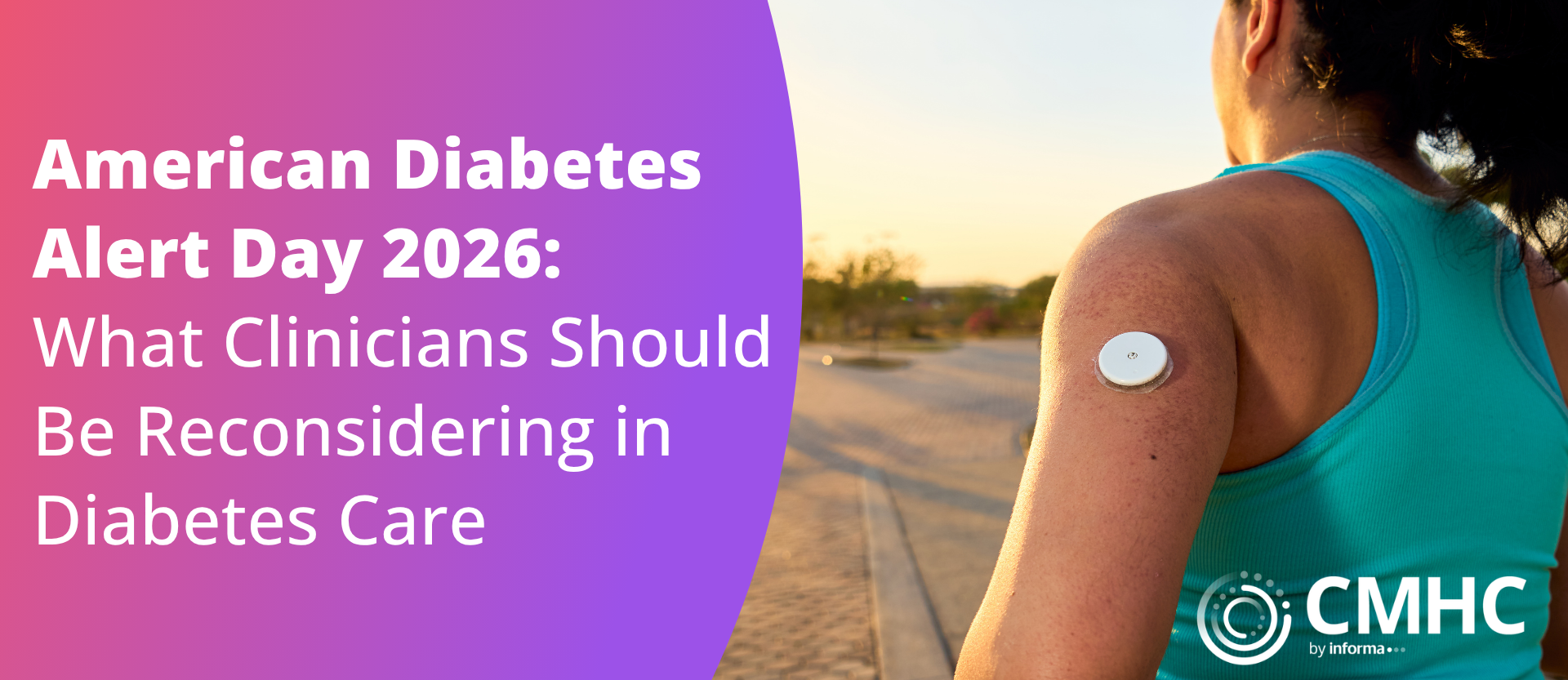
March 24 marked American Diabetes Alert Day, an annual initiative led by the American Diabetes Association to promote early detection and diabetes risk awareness.
For clinicians, however, the more pressing question is not whether diabetes is common, it’s whether we are fully leveraging the tools now available to reduce cardiometabolic risk across the spectrum of disease.
Because the treatment landscape has shifted meaningfully in the past five years.
The Scope of Diabetes Across the Spectrum
Diabetes is not a single entity. It includes:
Type 1 diabetes (autoimmune β-cell destruction)
Type 2 diabetes (progressive insulin resistance and β-cell dysfunction)
Gestational diabetes
Prediabetes
According to the CDC National Diabetes Statistics Report (2023), more than 37 million Americans have diabetes and 96 million have prediabetes. Approximately 1 in 5 adults with diabetes remain undiagnosed.
Globally, the World Health Organization estimates that over 420 million people are living with diabetes.
The burden extends well beyond hyperglycemia. Cardiovascular disease remains the leading cause of death among people with diabetes, reinforcing that cardiometabolic risk reduction must be central to management strategies.
Beyond A1C: The Expanding Role of Time in Range
While A1C remains foundational, it does not capture:
Glycemic variability
Postprandial excursions
Nocturnal hypoglycemia
Time in range (TIR)
The American Diabetes Association Standards of Care in Diabetes 2024 emphasize that CGM metrics such as time in range (70–180 mg/dL) provide complementary data beyond A1C and are associated with microvascular complication risk.
For patients with established ASCVD, CKD, or heart failure, glucose variability may contribute to oxidative stress and endothelial dysfunction, factors not reflected in quarterly A1C values alone. In a continuous-data era, episodic glycemic assessment is increasingly insufficient.
CGM in Type 2 Diabetes: Evidence Beyond Intensive Insulin
Continuous glucose monitoring (CGM) is standard in type 1 diabetes. However, its role in type 2 diabetes, particularly outside of multiple daily insulin injections, remains underutilized.
A randomized clinical trial published in Diabetes Care demonstrated that CGM significantly improved A1C in adults with type 2 diabetes treated with basal insulin compared with traditional blood glucose monitoring.
Beyond A1C reduction, CGM improved time in range and reduced hyperglycemia exposure.
The clinical implication is not simply tighter control. It is:
Earlier detection of therapeutic nonresponse
Better medication titration
Data-informed shared decision-making
Enhanced behavioral reinforcement
GLP-1 Receptor Agonists: A Cardiometabolic Strategy, Not Just a Glucose Intervention
GLP-1 receptor agonists have evolved well beyond their original positioning as glucose-lowering agents.
Large cardiovascular outcomes trials fundamentally shifted their role in clinical practice. In LEADER and SUSTAIN-6, liraglutide and semaglutide demonstrated significant reductions in major adverse cardiovascular events in high-risk patients with type 2 diabetes. More recently, the SELECT trial extended this cardiometabolic conversation into obesity populations without diabetes, reinforcing the broader vascular impact of GLP-1–based therapies.
These findings reframed GLP-1 RAs from glycemic tools to cardiovascular risk–modifying therapies.
The ADA 2024 Standards of Care now recommend GLP-1 receptor agonists for patients with type 2 diabetes and established ASCVD or high cardiovascular risk, independent of baseline A1C. In other words, their value is no longer confined to glucose reduction alone.
Yet in real-world practice, GLP-1 RAs are still frequently initiated reactively, after glycemic deterioration, rather than proactively as part of an intentional cardiometabolic risk-reduction strategy.
For cardiometabolic clinicians, the question is no longer whether GLP-1 RAs lower A1C. It is whether they are being deployed early enough, strategically enough, and consistently enough to alter long-term cardiovascular trajectories.
What Many Practices Are Not Yet Operationalizing
American Diabetes Alert Day should prompt clinicians to reconsider:
Is CGM being introduced early enough in type 2 diabetes?
Are GLP-1 RAs framed as cardioprotective agents, not just glucose-lowering tools?
Is CGM data being used to evaluate GLP-1 response beyond A1C shifts?
Are workflow systems optimized to incorporate CGM metrics into decision-making?
Integrating CGM with GLP-1 RA therapy allows clinicians to:
Quantify improvements in time in range
Identify residual postprandial hyperglycemia
Adjust therapy based on real-time trends
Improve patient adherence through visual glucose feedback
This represents a shift from episodic to continuous management.
Translating Evidence Into Practice: New CME Opportunity
To support clinicians in operationalizing these advances, CMHC is offering a complimentary, interactive, case-based CME program:
Integrating CGM with GLP-1 RA Therapy: Clinical Evidence, Treatment Planning, and Overcoming Barriers in Managing T2DM
This activity is designed to help clinicians:
Evaluate clinical evidence supporting CGM in patients using GLP-1 RA therapy
Develop treatment plans that integrate real-time glucose data
Mitigate barriers related to access, workflow integration, and adherence
👉 Explore the CME activity here.
The Clinical Reflection
Are we still managing diabetes quarterly in a real-time data environment?
Are we initiating cardioprotective therapies early enough?
Are we incorporating time in range into cardiovascular risk discussions?
Diabetes care in 2026 is no longer defined solely by A1C.
It is defined by continuous data, cardiometabolic risk modification, and precision-guided therapy.
Sources:
https://www.nejm.org/doi/full/10.1056/NEJMoa1603827
https://www.nejm.org/doi/full/10.1056/NEJMoa1607141
https://www.nejm.org/doi/full/10.1056/NEJMoa2307563
https://www.who.int/news-room/fact-sheets/detail/diabetes
https://archive.cdc.gov/#/details?url=https://www.cdc.gov/diabetes/php/data-research/methods.html