




Lipoprotein(a) Awareness Day 2023

The Family Heart Foundation established Lipoprotein(a) Awareness Day to raise awareness worldwide of elevated Lipoprotein(a), also known as Lp(a). On March 24, we will use the power of our voices so that everyone understands why they should #KnowLpa. Through national and local media, as well as social media engagement, we will draw attention to this important inherited disorder and encourage everyone to join the movement. And we need your help!

By sharing important information, we can empower all stakeholders to spread the word about high Lp(a) as an under-recognized cause of premature heart disease and stroke. Over the last 10 years, the Family Heart Foundation – together with our advocacy partners, clinical champions, and patient advocates – have reached tens of millions of people with life-saving information about Familial Hypercholesterolemia.

This March we can reach more people at risk for early heart disease and stroke with the second annual Lp(a) Awareness Day and make a difference for those who may never have heard of this very common genetic condition.

Understanding Lp(a) Risk

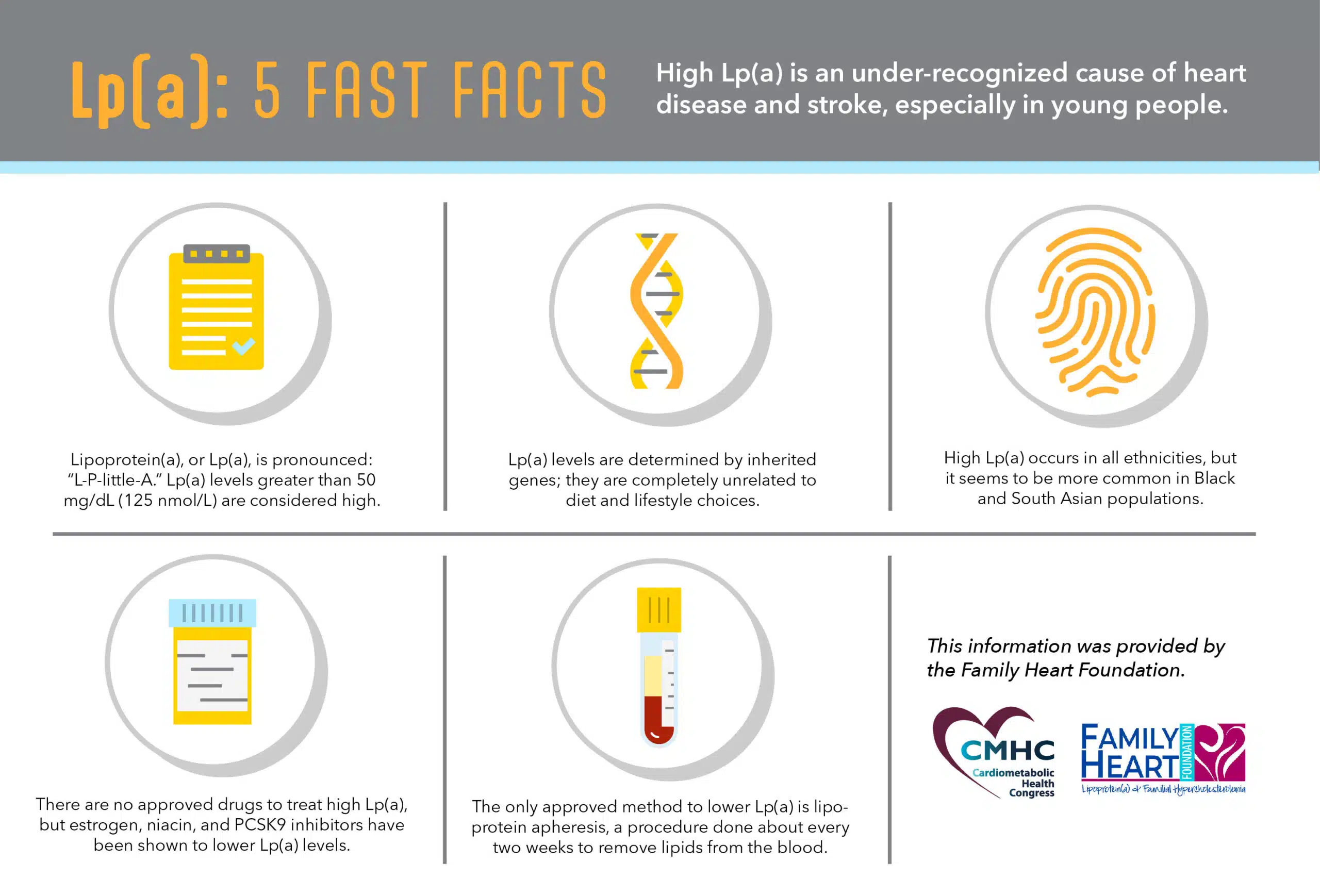
Individuals with elevated Lp(a) typically reach their adult levels by the time they’re five years old. This means, just like with familial hypercholesterolemia, atherosclerosis can begin early in life. The risk for early heart disease and stroke is roughly 2-4 times higher than the general population. High Lp(a) occurs in 1 in every 5 people, but fewer than 1% of those people know they have it.

There are currently many medications available to lower LDL cholesterol. On the other hand, the only FDA-approved therapy to lower Lp(a) is lipoprotein apheresis. It’s a dialysis-like procedure where a machine physically removes both Lp(a) and LDL cholesterol from the blood stream on a weekly or bi-weekly basis. This 3-hour process involves removing blood from one arm, passing it through a special column to extract the LDL and Lp(a), and returning the blood to the other arm. For apheresis to be approved, a person must have an Lp(a) greater than 60 mg/dl, have FH, and/or a known vascular disease. Click here to view Lipoprotein Apheresis center locations

Even without medication, people with FH and high Lp(a) can work to reduce all other risk factors. If you are overweight, try to get to a healthier weight. If you smoke, please quit. These are not easy changes to make, but the sooner you do it – the better. If you have other risk factors, like high blood pressure or diabetes, take all prescribed medications.

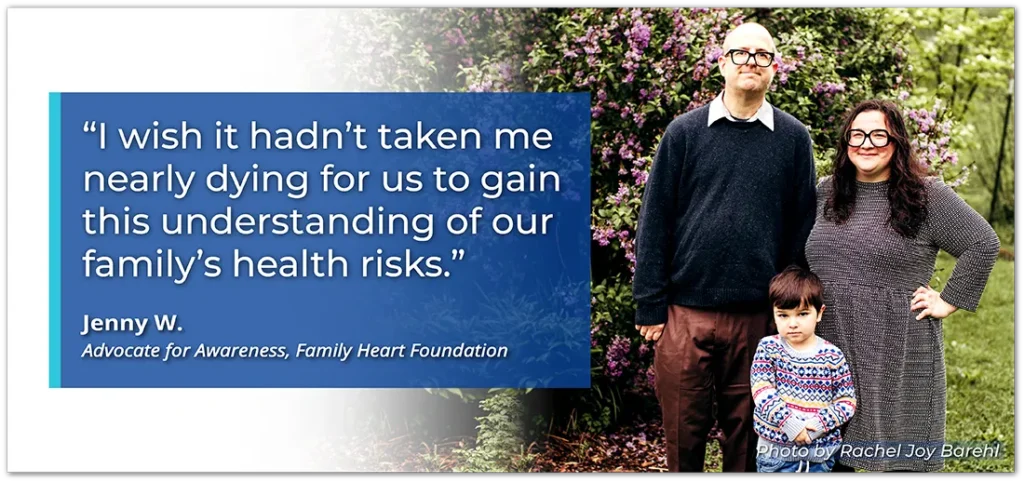
Read Real Patient Lp(a) Stories

Spread The Word to Raise Awareness

This content was shared with Cardiometabolic Health Congress by our partner, Family Heart Foundation, in observance of Lipoprotein(a) Awareness Day. Share this story to help spread awareness and use the hashtag #KnowLpa.


More Articles
AAPI Heritage Month Webinar RECAP
On Thursday, May 25, 2023, Cardiometabolic Health Congress (CMHC) proudly welcomed Dr. Kris Vijay, president of the Innovative Cardiometabolic Center…
Cardiovascular Outcomes with Colchicine
Colchicine is an anti-inflammatory drug derived from Colchicum autumnale, a toxic autumn-blooming flowering plant commonly known as autumn crocus or…
Give and Take: Artificial Sweeteners and Cardiometabolic Health

Researchers from Cleveland Clinic looking for new links to cardiovascular disease found that high levels of erythritol in the blood contributed to a higher risk of stroke and heart attack. Could they have inadvertently uncovered a new pathway to heart disease?

Sugar Substitutes: More Flavor Less Guilt?

It is no surprise that demand for and consumption of artificial sweeteners have increased in the last few decades, as the cardiometabolic dangers of sugar consumption are expounded. Studies show that a diet high in sugar is associated with the development of cardiorenal metabolic diseases such as obesity, type 2 diabetes, and cardiovascular disease.

The Coronary Artery Risk Development in Young Adults (CARDIA) study demonstrated that the consumption of sugar-sweetened beverages was associated with several cardiometabolic outcomes – high waist circumference, high levels of low-density lipoprotein cholesterol, high triglycerides, and hypertension. The American Heart Association (AHA) endorses lowering sugar intake, recommending no more than six teaspoons of sugar per day for women, and no more than nine teaspoons of sugar per day for men.

Health agencies seem to agree with swapping out sugar for substitutes; there are six low-calorie sweeteners approved for use as food additives in the U.S. and Europe. But, is all the flavor of sugar with a fraction of the calories too good to be true?

Findings on the Effects of…
Cardiometabolic Health Congress Faculty Make Headlines
Cardiometabolic Health Congress prides itself on having some of the most trusted names in cardiometabolic health on our faculty roster.
Latest Blogs

Subscribe

Sign up to receive updates on educational opportunities, complimentary content, exclusive discounts, and more.