
Were you one of the forward-thinking providers in attendance for the Cardiometabolic Health Congress (CMHC) webinar, Accelerating Diversity, Equity, and Inclusion in Cardiometabolic Health? In honor of both Black History Month in February and Women’s History Month in March, this insightful one-hour virtual conversation covered diversity and inclusion in cardiometabolic health, specifically delving into social determinants of health in the management of diabetes, women’s cardiovascular risk across the lifespan, and strategies for multidisciplinary collaboration. Here’s a recap of the discussion, moderated by longtime CMHC faculty member Keith C. Ferdinand, MD, that took place during the live webinar on Thursday, Feb. 16, 2023.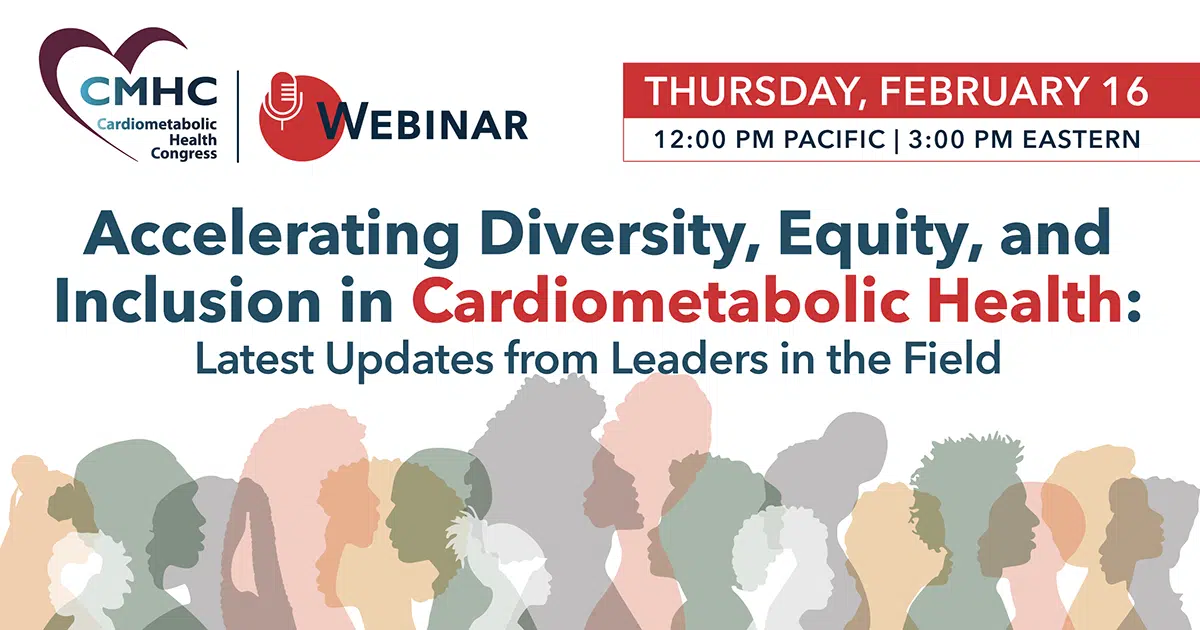
Dr. Ferdinand opened the insightful discussion on the importance of diversity and inclusion in cardiometabolic health by introducing his co-panelists, Rachel M. Bond, MD, and James R. Gavin III, MD, PhD. The panel then welcomed the audience to a unique webinar highlighting some of unique challenges and advances in managing cardiometabolic health in these populations. The open forum format offered real discussions on practical strategies to advance care and optimize outcomes.
“Let’s work together to overcome the longstanding and unacceptable gaps in health outcomes.” – Dr. Ferdinand
Dr. Gavin emphasized the need for clinicians to work together, embracing the team approach. He urged listeners to make sure the silos are never given a chance to rise again. “Exchange email addresses and cell phone numbers with your colleagues so we can share and collaborate. That’s the only way this multidisciplinary approach is going to be successful.”
“When we lose access to living the fullest possible life, we are cheated out of contributing our fullest potential, and in that sense the entire society loses.” – Dr. Gavin
Misinformation is rampant on social media, and as the youngest member of the panel and an active member of social media, Dr. Bond began by saying we need to first be able to identify and address the spread of misinformation, only then can we halt its spread. Dr. Bond also mentioned her family history, in that her grandmother was misdiagnosed with diabetes for so long that it resulted in cardiovascular disease in the form of a stroke. Many cardiovascular events that can occur during reproductive years are largely preventable, but are things that most clinicians don’t think about until later in life. Women of color suffer significant disservice due to the fact that they may only seek care during their pregnancies and remain untreated in the years before, between, and after childbearing.
“We share the burden and should share the costs of these inequities.” – Dr. Bond
Clinicians also deal with people who have low literacy on the computer, identifying suspicious links or firewalls, and maybe too willing to share personal information. These patients may deal better with paper pamphlets, and that’s something providers need to be willing to consider, even in the digital age. According to Dr. Gavin, we need not only evidence-based information, but it needs to be accessible; people shouldn’t have to jump through too many hoops to get the information clinicians point them toward.
“We want to reach people where they work, live, pray and play.” – Dr. Ferdinand
Depending on factors like demographics, geography, the institution they attended and at what age, there may be providers who truly don’t connect the issue of worse health outcomes to racial or gender minority status, and Dr. Gavin said that is okay. The objective of this webinar is not to shame, separate, or chastise clinicians who need more information on the topic and, Dr. Gavin added, you can’t fix a problem you don’t know you have.
“That’s why we do these webinars, there may be clinicians who don’t see a lot of these patients.” – Dr. Gavin
Attendees had the invaluable opportunity to interact with the webinar faculty through a live Q&A session. Dr. Ferdinand let participants know they’d answer any questions as honestly and as openly as possible. For instance, he said, something a listener may wonder but not feel comfortable asking would be, “Why should I care about women’s health if I don’t identify as a women or treat women?” That’s actually a very provocative and honest question.
“Women’s health contributes to a large burden on the health care system. There are women in our lives. Advancing the care of women is not only helping the health of an individual, its helping the family, community, and society. The importance is for your family, colleagues, and generational health.” She closed by saying, “My health impacts those who will come after me, and is affected by those who came before me.”
To see all of the insightful questions asked and answered, watch the full webinar recording, below.
We hope you enjoy this enlightening discussion between these esteemed colleagues and diversity experts!